
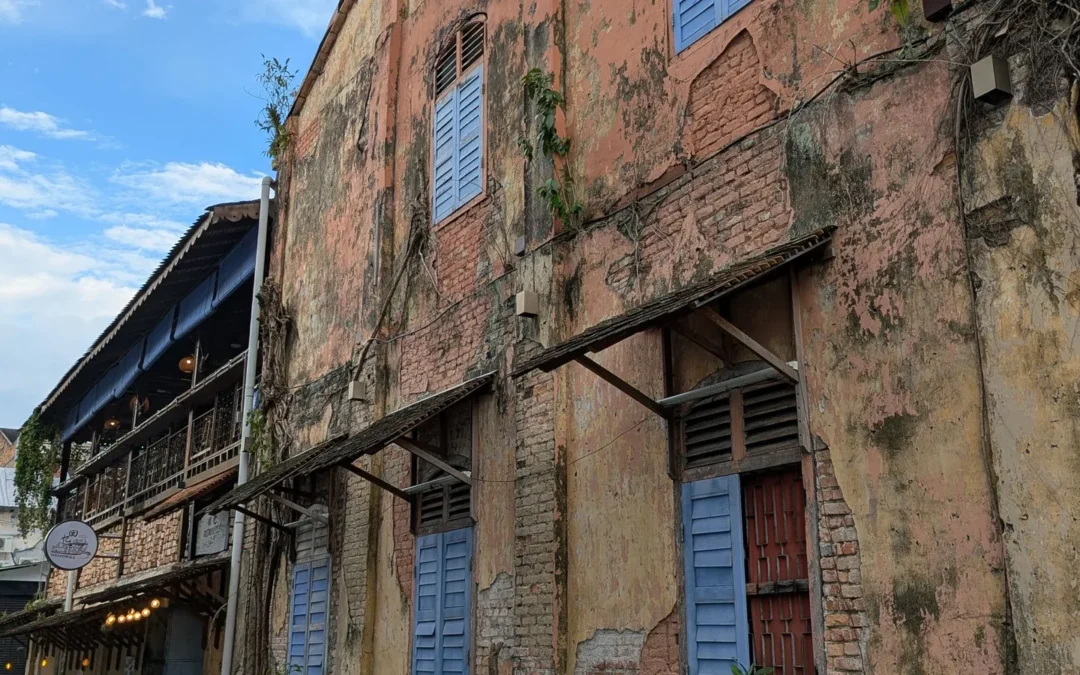
SEO for Cafes and Heritage Businesses in Ipoh Old Town

Ipoh Old Town businesses compete on more than coffee, food or souvenirs; customers also choose a sense of place. Quantum Search helps cafes and heritage-led operators make that character searchable through accurate venue facts, original stories and practical visit information.
Key Takeaways
- Separate what local regulars need from what first-time visitors need to know.
- Tell the building or brand story only with facts the business can verify.
- Keep menus, hours, accessibility, parking and directions current across the profile and website.
- Turn visual appeal into crawlable explanations rather than leaving the whole story on social media.
A locally grounded seo service Ipoh plan can connect the Business Profile, venue page, menu or product information and Old Town guides without reducing the brand to repeated ‘heritage’ keywords.
Use the place–story–proof triangle
Place answers where the business is, how to arrive and what the surrounding area means for a visit. Story explains the real origin of the venue, product or building. Proof shows current details: original photos, a named founder, a dated restoration account or an approved source.
If one corner of the triangle is missing, do not fill it with folklore. A newer cafe in a historic shophouse can be honest about being contemporary while celebrating the neighbourhood through respectful design, local collaborations and accurate visitor guidance.

Write for two Old Town discovery modes
The local regular
Lead with current menu, value, hours, convenience, events and reasons to return.
The day visitor
Explain what makes the stop worthwhile, how it fits a walk and what access conditions to expect.
The heritage seeker
Offer a sourced story with dates, people and preservation detail the business can substantiate.
The ready customer
Keep navigation, calls, reservations or purchases obvious after the story earns attention.
Google explains that accurate, detailed business information helps local relevance and that distance and prominence also shape local results; consult the official Business Profile guidance. Google’s AI features documentation adds that important information should be available in textual form and internally linked, with no special AI markup required; see the official Search Central guidance.

Use the place–story–proof triangle
An Ipoh Old Town cafe or heritage-led business can be discovered because of where it is, what it offers and why its story matters. These three elements should support one another. Place explains the real premises and visit. Story explains the origin, building, craft or people with evidence. Proof shows current products, service, photographs, process and customer information. If one side is missing, the page can feel generic or romanticised.
Begin with the business decision. A cafe wants a customer to understand the menu, atmosphere, hours and visit. A maker may need to explain products, demonstrations, collection or shipping. A heritage attraction or shop may need tickets, accessibility, language, duration and opening information. Do not force every Old Town business into the same tourism template.
Place
Real address, entrance, hours, access, nearby orientation and the experience of arriving.
Story
Verified history, people, restoration, craft or business origin without embellished claims.
Proof
Current products, menu, process, photographs, policies and responsible first-party detail.
Action
Directions, reservation, purchase, enquiry or visit planning appropriate to the business.
Make the visit page operationally dependable
Create one page that visitors can trust for the practical trip. Use the real public name, address, map pin, telephone and opening schedule. Show the entrance and explain the unit, floor, stairs, lift, parking or pedestrian approach where relevant. If hours vary by day, season or event, assign someone to update the website and profile together. Do not leave closure notices only on a disappearing social story.
Describe the experience without overselling it. State whether visitors normally queue, reserve, browse, join a tour or collect an order. Explain approximate visit duration only when the team can support it and qualify individual variation. If an activity depends on staff, weather, stock or minimum numbers, put the condition near the booking action.
Visit information to check regularly
- Correct entrance, map pin, unit, floor and recognisable exterior photograph.
- Opening days, service periods, special closures and last admission or order arrangements.
- Reservation, ticket, order, collection and monitored contact routes.
- Parking, walking, accessibility, toilet and seating facts the business can verify.
- Payment methods, price information and terms where the business publishes them.
- Temporary changes caused by renovation, events or operational limits.
Tell the building or brand story from evidence
A heritage story should identify what is known and how it is known. Collect dated photographs, records, family accounts with attribution, restoration documents and information from credible local or official sources. Distinguish the history of the street or city from the history of the individual premises. An old-looking interior is not proof of a particular construction date or former use.
Write the story through details a visitor can observe: façade, layout, materials, tools, recipes, signs, objects or working practices. Explain restoration and adaptation without claiming that every feature is original. Name contributors where appropriate and approved. If evidence is incomplete, use careful language such as “the business records” or “the family’s documented account” rather than presenting uncertainty as fact.
Story review rule
Every consequential date, designation, founder statement and restoration claim needs a source or an explicit first-party attribution. Remove a dramatic detail if the team cannot show where it came from.
Give cafes a menu-led discovery path
A cafe page should answer what is served, when, at what price context and for which dining moments. Publish core menu categories and signature items in selectable text. Use current photographs from the actual business. Explain dietary information only after the responsible team confirms ingredients, preparation and limitations. Do not label a venue with a certification or safety claim it cannot support.
Connect the menu to the visit. State breakfast or lunch periods, last order, takeaway, reservation and group arrangements. If the venue is known for a particular item, build a useful page around the product story, preparation and availability rather than repeating its name in every heading. A menu PDF may be offered, but the essential choice should remain readable on a phone.
Help heritage retailers and makers explain products
A heritage business that sells goods needs product information as well as a place story. Organise items by how customers choose: use, material, size, origin, maker, care, availability and whether the item can be collected or shipped. State which products are made by the business, curated from others or inspired by a tradition. Avoid implying local manufacture when the supply chain does not support the claim.
Process content can provide strong information gain. Show the stages, tools, time and skill involved with the responsible maker’s approval. Explain natural variation and care. Use video or photographs where motion and detail matter, but provide text and captions for the essential facts. A visitor should understand both the cultural story and the practical purchase.
Create Old Town guides that support a real visit
A local guide should begin at the business and help a customer plan a relevant outing. A cafe might publish a short morning route for nearby architecture and breakfast. A maker could explain how a workshop visit fits with surrounding stops. Verify walking routes, opening information and access; link to official sources for frequently changing details. Avoid copying a broad list of Ipoh attractions.
State the guide’s audience and limits. Heat, rain, traffic, stairs and opening patterns can change the experience. Do not promise exact walking times for everyone. Original staff photographs, current wayfinding and first-party suggestions are more useful than generic destination prose. Review recommendations so the page does not send visitors to a closed business.
Use photographs as evidence, not decoration
Show the real façade, entrance, interior, menu, products, people and process. A visitor should be able to recognise the business on arrival and compare what is offered. Compress images, use meaningful alternative text and keep important facts in nearby HTML. Do not place opening hours or an entire menu only inside an image.
Document permission and attribution. Avoid stock photography that implies a different venue, dish or craft. When historical images belong to an archive or contributor, confirm the right to publish and identify the source. A smaller set of authentic, well-captioned images supports trust better than a large gallery with no context.
Learn from reviews while protecting the story
Group review themes around products, service, atmosphere, access and expectations. Use them to identify missing information and operational problems. If visitors repeatedly misunderstand opening hours or cannot find the entrance, correct the source facts. If they value a specific story or demonstration, consider explaining it more clearly on the site.
Do not copy review language into marketing without permission or present a reviewer’s opinion as an objective fact. Ask for genuine feedback without filtering by sentiment or offering rewards for positivity. Respond calmly and avoid revealing purchase, visit or personal details. The goal is to improve the visitor experience, not manufacture prominence.
Measure whether discovery becomes a suitable visit or sale
Track calls, directions, reservations, menu views, product enquiries and purchases according to the business model. Review search themes by brand, product, meal moment, craft and visit-planning question. Connect digital actions to operational outcomes where possible: suitable bookings, completed visits, collection success and recurring questions.
Hold a monthly accuracy check and a quarterly content review. Update hours, menu, inventory, policies, photographs, stories and guide recommendations. Consolidate overlapping articles and protect the page that owns each decision. A credible Old Town presence is not built by adding “Ipoh” to generic content; it grows from verifiable place knowledge, a useful offer and a maintained path to visit or buy.
Connect online discovery with an on-site experience
Decide what the page prepares a visitor to notice or do. A cafe article may introduce a signature item and explain when it is served. A maker page may describe a process visitors can observe. A heritage shop may provide a short self-guided interpretation of objects or building features. The on-site team should know this promise and be able to deliver it during the stated hours.
Use simple feedback after launch. Ask staff whether visitors mention the page, arrive with better questions or misunderstand any detail. Update the copy when operations change. If a demonstration is no longer available, remove the invitation immediately. This alignment turns content into part of the visitor experience rather than a separate promotional layer.
Plan a small, defensible content cluster
Most heritage businesses do not need dozens of Old Town articles. Begin with the visit or store page, one strong offer page and one verified story or guide. Add content only when it answers a new decision with original evidence. Use internal links to show the relationship: story to product, guide to visit, menu to reservation or process to enquiry.
Keep an ownership register with the primary question, reviewer, evidence and update trigger for each page. If two articles begin attracting the same searches and give similar advice, consolidate them. A compact cluster is easier for staff to maintain and gives visitors a clearer route through the business’s place, story, proof and action.
Use a 90-day Old Town content sequence
During the first month, verify the visit page, profile, map, hours, entrance, offer and action route. During the second, improve the menu, product or experience page that most affects a customer decision. During the third, publish one story or guide supported by original evidence and connect it to the correct action. Review staff feedback and completed visits before expanding.
This order protects the business from promoting an attractive story while practical details remain unreliable. It also creates a stronger internal-link path: discovery leads to the offer, and the offer leads to a usable visit or purchase. Record who owns each page and what event should trigger an update.
- Month one: accurate place and visit foundation.
- Month two: useful menu, product or experience detail.
- Month three: one verified story or local guide.
- Measure suitable visits, enquiries or sales.
- Expand only when the next topic has distinct evidence.
Turn one venue visit into useful owned content
Observe
Record the questions customers ask, the details staff explain and the aspects visitors photograph or misunderstand.
Verify
Check dates, names, building history, product origin and practical information with an accountable source.
Publish
Create one focused page or update that answers a real decision, then link it to the venue action.
What to avoid
- Inventing a century-old origin story
- Leaving the current menu only in image carousels
- Writing solely for tourists and ignoring repeat local customers
Questions business owners ask
Does every Old Town business need a heritage story?
No. A new business can be compelling through its product, people and contribution to the area. An honest contemporary story is stronger than borrowed heritage.
Should cafes create content in several languages?
Only when it serves real customers and the business can maintain accurate, natural versions. Begin with the languages used in enquiries and in-store conversations.
Build a search plan around real customer decisions
Quantum Search is based in Seremban and supports businesses remotely across Malaysia. We do not claim a local office in this market, and we do not guarantee rankings, enquiries or AI citations.
Discuss your SEO priorities